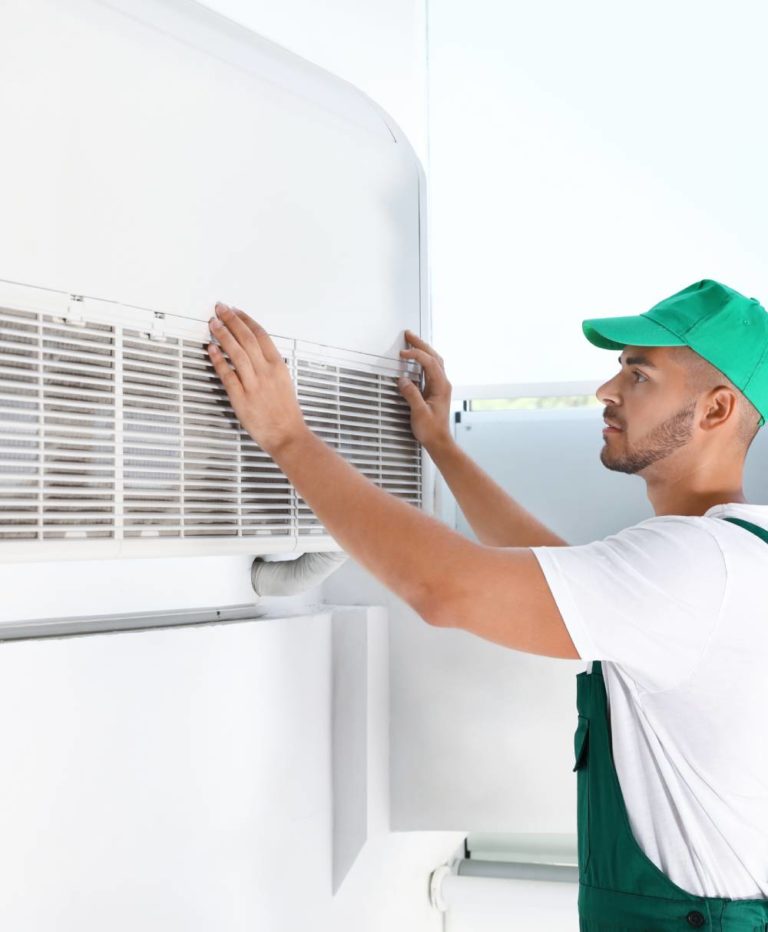
HVAC Technician
The HVAC/R Program provides students with the technical knowledge and practical, hands-on skills required to perform professional installations, routine service, and complex repairs on heating, refrigeration, and air conditioning systems.
Program Curriculum: HVAC/R
NCCER Core Curriculum Course (80 Hours)
The NCCER Core Curriculum is a prerequisite for all Level 1 craft training programs, including HVAC and Electrical work. Its modules cover foundational topics—such as Basic Safety and Communication Skills—while introducing trainees to construction drawings. As an industry-recognized program, it provides the essential groundwork for a successful career in technical education. Completing this curriculum equips trainees with the fundamental skills needed to advance and pursue further education in their chosen craft.
Introduction to HVAC (7.5 Hours)
Covers the core principles of heating, ventilating, and air conditioning. Explores HVAC career paths, apprenticeship structures, fundamental safety principles, trade licensure, and EPA guidelines.
Trade Mathematics (10 Hours)
Teaches trainees how to solve practical, trade-specific math problems involving line measurement, area, volume, weights, angles, pressure, vacuum, and temperature. Includes a baseline review of scientific notation, powers, roots, basic algebra, and geometry.
Basic Electricity (12.5 Hours)
Introduces power generation and distribution, common electrical components, and AC/DC circuits. Focuses on reading and interpreting wiring diagrams alongside electrical safety practices specific to the HVAC field.
Introduction to Heating (15 Hours)
Examines the fundamentals of heating systems and the combustion process. Details the types and designs of gas furnaces, their internal components, and standard installation and service procedures.
Introduction to Cooling (30 Hours)
Explains the operational concepts of the refrigeration cycle, identifying primary and secondary HVAC/R components alongside common refrigerants. Covers the principles of heat transfer, pressure-temperature relationships, and basic control concepts for simple systems.
Introduction to Air Distribution Systems (15 Hours)
Analyzes the factors governing air movement and its measurement within common distribution systems. Examines the mechanical equipment and materials required to build air networks, including system design principles for both hot and cold climates.
Basic Copper and Plastic Piping Practices (10 Hours)
Identifies the various types of copper tubing and fittings used in the HVAC/R industry and details how to mechanically join them. Explores the application, assembly, and installation practices of diverse plastic piping systems.
Soldering and Brazing (10 Hours)
Details the equipment, safety techniques, and filler materials used to join copper tubing via soldering and brazing. Covers required PPE, surface preparation, and specialized workflows for brazing copper to dissimilar metals.
Basic Carbon Steel Piping Practices (10 Hours)
Identifies carbon steel piping materials and fittings, focusing heavily on proper threading, grooving, joining, and installation techniques.
Alternating Current (10 Hours)
Presents the mechanics of alternating current (AC) generation, illustrating how single-phase and three-phase AC power drives resistive and inductive HVAC/R circuits. Identifies various system transformers, explains motor operations, and outlines safe testing procedures for AC-powered devices.
Compressors (12.5 Hours)
Highlights the vital role of refrigerant compressors within an HVAC system, exploring their distinct types and operational uses. Equips technicians with the diagnostic skills needed to troubleshoot and correct compressor issues before expensive failures occur.
Refrigerants and Oils (15 Hours)
Discusses eco-friendly modern refrigerants and compressor lubricating oils used in contemporary environmental systems, emphasizing the specialized handling and service protocols technicians must legally follow.
Leak Detection, Evacuation, Recovery, and Charging (30 Hours)
Provides comprehensive guidance on servicing the refrigerant circuit, focusing on four essential tasks: leak detection, evacuation, recovery, and charging. Includes extensive hands-on practice, performance tasks, and a breakdown of US EPA compliance mandates.
Metering Devices (12.5 Hours)
Explains the primary functions and operations of various metering devices within the mechanical refrigeration cycle. Covers the precise process for selecting and installing thermal expansion valves (TXVs).
Heat Pumps (20 Hours)
Introduces highly efficient heat pump systems and clarifies their mechanical operation alongside electric resistance supplemental heating elements. Reviews critical installation variables for both split and packaged heat pump configurations.
Basic Maintenance (20 Hours)
Outlines routine maintenance tasks and inspection procedures for gas furnaces, cooling systems, and heat pumps. Focuses on proper execution of component lubrication, belt installations, and mandated service documentation.
Chimneys, Vents, and Flues (5 Hours)
Examines the specific chimney, vent, and flue requirements used to exhaust combustion byproducts safely from fuel-burning furnaces and boilers.
Sheet Metal Duct Systems (10 Hours)
Covers the advantages and fabrication workflows of sheet metal air ducts, offering instructions on proper system layout to maximize airflow and prevent energy-wasting leaks.
Fiberglass and Fabric Duct Systems (7.5 Hours)
Reviews fabrication methods, installation guidelines, and repair techniques for fiberglass duct systems. Concludes with an evaluation of modern, increasingly popular fabric-based duct solutions.
Commercial Airside Systems (12.5 Hours)
Examines large-scale air distribution systems deployed across multi-zone commercial structures. Identifies specialized air terminals, accessories, and heavy-duty air-source equipment.
Air Quality Equipment (5 Hours)
Introduces variables affecting indoor air quality (IAQ) and human comfort. Focuses on equipment used to manage humidity, optimize air filtration materials, and properly introduce fresh outdoor air into a building.
Introduction to Hydronic Systems (15 Hours)
Introduces hydronic heating systems, explaining how water is heated, circulated, and regulated through terminal devices to deliver zone-specific comfort.
Certifications You'll Earn
Career Outcomes
What Our Graduates Say
“RTI changed the trajectory of my life. I came in with nothing and left with a real career. My instructor didn't just teach me HVAC — he taught me how to show up like a professional every single day.”
Alexander Santana
Now working as HVAC Technician in Manhattan
“Taking the HVAC class at RTI was a great decision for my career. The instructors were knowledgeable and focused on real-world, hands-on training that prepared me for the field. The skills I learned in troubleshooting, diagnostics, and installation directly helped me land a job in HVAC. RTI gave me the confidence and practical experience employers look for, and I would highly recommend the program to anyone serious about working in the HVAC industry.”
Georgie Hernandez
CRED PROGRAM - HVAC GRADUATE - COHORT 2
“Renaissance Technical Institute and the CRED program was a very great opportunity for me to start on my career and what I originally wanted to do after school. Their staff treated me very well and they are very well appreciated. I hope they know that because they always check up on me to see how I am doing and are always helping me in other stuff outside of CRED. I was having trouble beforehand getting a job in the industry I wanted to go in without any experience but CRED made it easier for me to get my foot in the door and get the experience I needed to further my career. I'm glad that I took the opportunity to attend the program and always recommend it to anyone that is looking for a career similar or in the same field I wanted to go in. Thank you so much Renaissance Technical Institution and the CRED program for the opportunity.”
Pedro Rondon
CRED PROGRAM – HVAC GRADUATE – COHORT 2
Program Info
- Duration
- 5 months
- Language
- English
- Format
- In-Person · East Harlem
- Tuition
- FREE — Zero Tuition
- Eligibility
- 17+, no diploma required, no criminal background bar
- Prerequisites
- NCCER Core Curriculum
Schedule
Contact admissions for current cohort start dates.