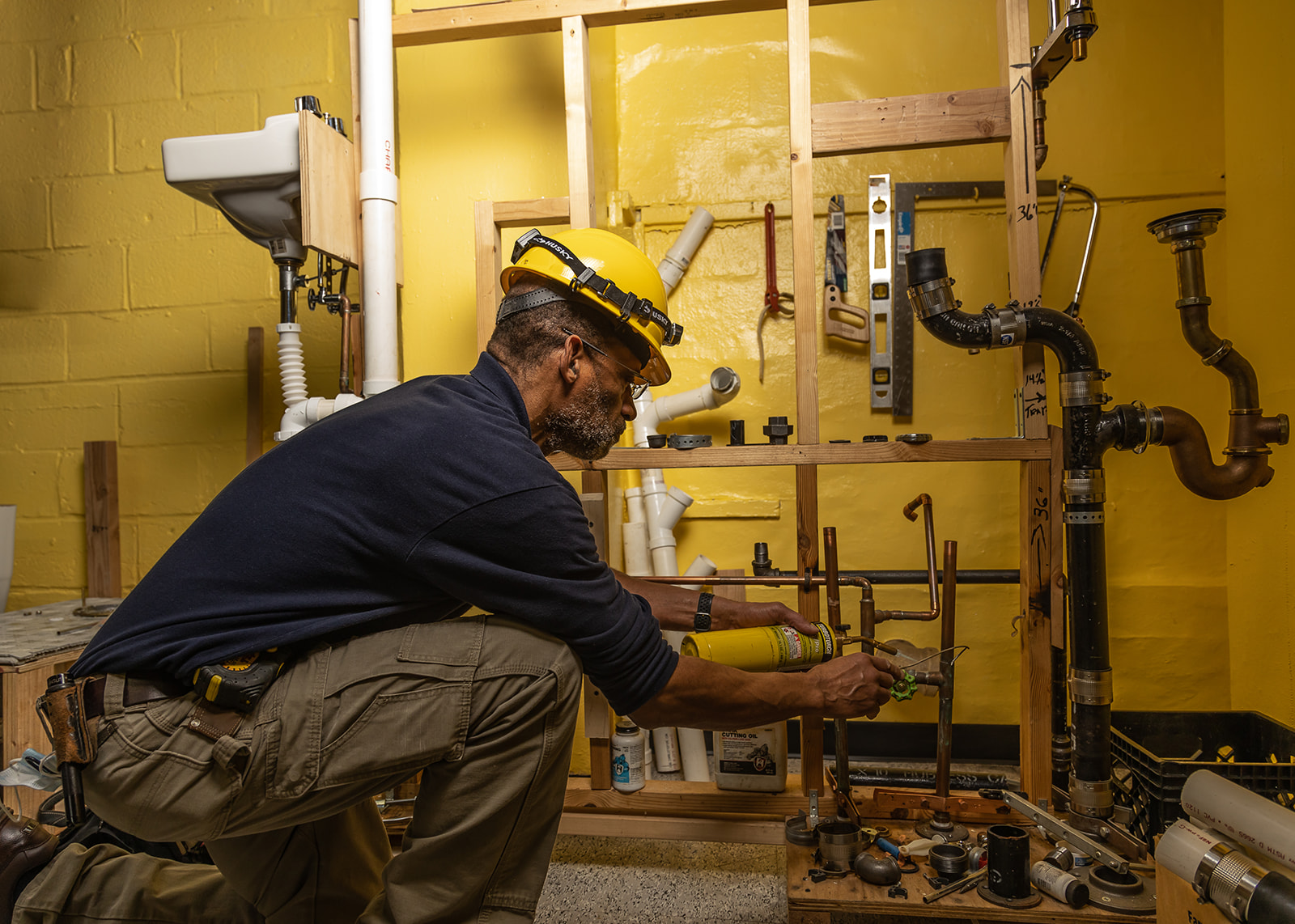
Carpentry
Carpenters make up the largest building trades occupation in the industry, and those with well-rounded skills are in high demand. This curriculum provides the essential safety foundation and hands-on training necessary to master the trade. Trainees will gain the skills required for a wide range of construction activities, from building bridges and installing cabinetry to repairing complex wood structures.
Program Curriculum: Carpentry Levels 1 & 2
NCCER Core Curriculum Course (80 Hours)
The NCCER Core Curriculum is a prerequisite for all Level 1 craft training programs, including HVAC and Electrical work. Its modules cover foundational topics—such as Basic Safety and Communication Skills—while introducing trainees to construction drawings. As an industry-recognized program, it provides the essential groundwork for a successful career in technical education. Completing this curriculum equips trainees with the fundamental skills needed to advance and pursue further education in their chosen craft.
Orientation to the Trade (5 Hours)
Reviews the history of the trade and explores diverse career paths, including apprenticeship opportunities. This module emphasizes the vital skills, workplace responsibilities, and safety awareness that every successful carpenter should possess.
Building Materials, Fasteners, and Adhesives (7.5 Hours)
Introduces standard construction materials, including lumber, sheet goods, engineered wood products, structural concrete, fasteners, adhesives, and structural steel. It also covers the foundational methods used for squaring a building.
Hand and Power Tools (7.5 Hours)
Details the hand and power tools essential to carpentry. Training emphasizes safe, proper operation, as well as routine tool care and maintenance.
Introduction to Construction Drawings, Specifications, and Layout (20 Hours)
Covers techniques for reading and interpreting construction blueprints and project specifications, with a specific focus on details relevant to the carpentry trade. It also introduces basic quantity takeoffs.
Floor Systems (27.5 Hours)
Covers framing fundamentals and step-by-step procedures for laying out and constructing wood floors using both traditional lumber and engineered building materials.
Wall Systems (20 Hours)
Describes procedures for laying out and framing walls. Topics include roughing-in door and window openings, constructing corners and partition Ts, bracing walls, and estimating required framing materials.
Ceiling Joist and Roof Framing (40 Hours)
Identifies common roof types and provides instructions for laying out rafters on gable roofs, hip roofs, and valley intersections. This module also covers stick-built versus truss-built roofs and roof sheathing installation.
Basic Stair Layout (12.5 Hours)
Introduces various stair designs and relevant building code requirements. Focuses on practical techniques for measuring and calculating rise, run, and stairwell openings, laying out stringers, and fabricating basic stairways.
Introduction to Building Envelope Systems (12.5 Hours)
Explains the concept and core components of a building envelope. Provides clear instructions for selecting and installing different types of windows, skylights, and exterior doors.
Commercial Drawings (25 Hours) | Elective for Residential Path
Teaches trainees how to read, analyze, and interpret commercial blueprints and architectural specifications.
Roofing Applications (25 Hours) | Elective for Commercial Path
Demonstrates how to properly prepare a roof deck and install various roofing materials for both residential and commercial buildings.
Thermal and Moisture Protection (7.5 Hours)
Covers the selection and installation of insulation materials for walls, floors, and attics, as well as standard practices for applying vapor barriers and waterproofing materials.
Exterior Finishing (35 Hours) | Elective for Commercial Path
Examines various exterior finish materials and their specific installation procedures, including wood, metal, vinyl, and fiber-cement siding.
Cold-Formed Steel Framing (15 Hours)
Outlines the types and grades of steel framing materials. Includes instructions for selecting and installing metal framing for interior, exterior, load-bearing, and nonbearing walls.
Drywall Installation (15 Hours)
Details types of gypsum drywall, their applications, and proper fastening methods for walls and ceilings using nails, screws, and adhesives. It also addresses the installation of fire- and sound-rated wall assemblies.
Drywall Finishing (17.5 Hours)
Identifies the tools, materials, and methods used to finish and patch gypsum drywall, highlighting both manual and automatic taping techniques.
Doors and Door Hardware (20 Hours)
Covers the installation of metal, wood, folding, and pocket doors within steel, wood, and masonry walls. It also covers the installation of associated hardware, such as locksets and door closers.
Suspended Ceilings (15 Hours) | Elective for Residential Path
Explains layout and installation procedures for commercial suspended ceilings, including ceiling tiles, drywall suspension systems, and pan-type ceilings.
Window, Door, Floor, and Ceiling Trim (25 Hours)
Introduces different types of finish trim and focuses on the proper methods for selecting, cutting, and fastening trim to achieve a flawless, professional look.
Cabinet Installation (10 Hours)
Provides detailed, step-by-step instructions for selecting and installing base cabinets, wall cabinets, and countertops.
Certifications You'll Earn
Career Outcomes
What Our Graduates Say
“The hands-on training was next level. We worked on real projects from day one. I got hired before I even graduated. If you put in the work, RTI will open every door.”
Brayard Arno
Lead Carpenter, commercial construction
“At RTI, I didn't just learn to handle tools; I learned the art of the trade under the mentorship of my instructor, Mario. His teaching style was a perfect balance of patience and precision. Whether we were mastering the NCCER Core Curriculum or practicing hands-on framing techniques, Mario ensured that no student was left behind. He taught me that carpentry is not just about speed it is about the patience to measure twice and the discipline to execute the hands-on training correctly every time.”
Jessica Emile
CRED PROGRAM - CARPENTRY GRADUATE - COHORT 2
Program Info
- Duration
- 11 months (English) / 6 months (Spanish)
- Language
- English & Spanish
- Format
- In-Person · East Harlem
- Tuition
- FREE — Zero Tuition
- Eligibility
- 17+, no diploma required, no criminal background bar
- Prerequisites
- NCCER Core Curriculum
Schedule
Contact admissions for current cohort start dates.